20/12/2025
Neisseria meningitidis filamentous phage MDA promotes colonisation by selecting hyperadhesive pili variants
Abstract
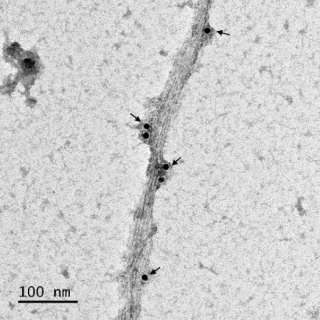
Filamentous phages are non-lytic phages mutually beneficial to their bacterial hosts. In Neisseria meningitidis, the filamentous phage MDA is associated with invasive diseases thanks to its key role in the formation of biofilm during epithelium colonisation. The infection model for filamentous phages has been defined for phages Ff and CTX. These phages bind to the tips of bacterial pili before being translocated into the periplasm of their hosts. The aim of this study is to investigate the relationship between filamentous phage infection and type IV pili, using the bacterium Neisseria meningitidis and the bacteriophage MDA as model organisms. We show that MDAΦ rather binds to type IV pili along their entire length with preferential binding to positively charged variants of the major fibre-forming pilin, demonstrating a role for antigenic variation in phage infection. Strikingly, bacteria expressing the more positively charged pilin are also the most adhesive, suggesting that MDAΦ primarily target the most adhesive bacteria. Finally, we show that adhesion to human cells is sufficient to amplify the phage-positive meningococcal population. Overall, this study reveals how a filamentous phage can target hyperadhesive bacterial variants and promote their selection, thereby establishing a link between phage infection and bacterial colonisation.